Wondering what actually matters when you buy a ski condo in Snowmass Village? It is easy to get swept up in mountain views, a stylish remodel, or the words “ski-in/ski-out” in a listing. But in a resort market like Snowmass, small details about access, parking, storage, and rental rules can have a big impact on how easy your ownership experience feels. If you want to buy with confidence, here is what to focus on before you make an offer. Let’s dive in.
Prioritize Real-World Ski Access
In Snowmass Village, location is a major part of value, but not all ski access works the same way. The market is largely slopeside, and local tourism materials say about 95% of lodging is slopeside. Even so, one building’s version of convenience can feel very different from another’s once you arrive with boots, bags, and groceries.
Some properties are true ski-in/ski-out, while others are ski-out, adjacent to a lift, or a short walk to the village core. Examples in Snowmass marketing include Interlude and Stonebridge as ski-in/ski-out, Lichenhearth as ski-out and adjacent to Base Village, Timberline as ski-in/ski-out with a short walk to Snowmass Mall, and Base Village residences such as Limelight next to the Elk Camp Gondola. Those distinctions matter when you plan to use the condo often or host guests.
Ask How Many Steps It Takes
A smart question is not just whether the building is labeled ski-in/ski-out. Ask how many steps it really takes to get from the unit to the snow, the lift, or the gondola in winter conditions. A short, flat walk can feel very different from a steep path, stairs, or a route that becomes icy.
Check Access From the Unit Itself
Building-wide access can sound great, but your specific unit matters too. A condo in a well-located complex may still involve elevators, exterior walkways, or a longer path to the slope than you expect. When possible, walk the route yourself and picture doing it with gear in the middle of winter.
Evaluate Shuttle Convenience
If a condo is not directly on the slope, the shuttle system becomes a key part of day-to-day convenience. Snowmass Village has a free Village Shuttle, and the town notes it reaches almost any location in the village. Service between Snowmass Center and the Village Mall runs every 10 minutes from 7:10 a.m. to 12:30 a.m.
Snowmass also connects to Aspen with free buses, which adds flexibility if you want easy movement beyond the village. Local tourism materials also note that Snowmass is about 15 minutes from Aspen/Pitkin County Airport, and one lift ticket covers all four Aspen Snowmass mountains. For second-home owners and visiting guests, those details can make a condo feel more usable from the moment you arrive.
Look at the Winter Route to the Shuttle
Do not just ask whether a shuttle stop exists nearby. Ask how easy it is to reach in snow and ice, how direct the path is, and whether it works well for guests carrying skis or luggage. For many buyers, close shuttle access is the practical backup to being directly slopeside.
Compare Amenities With Your Lifestyle
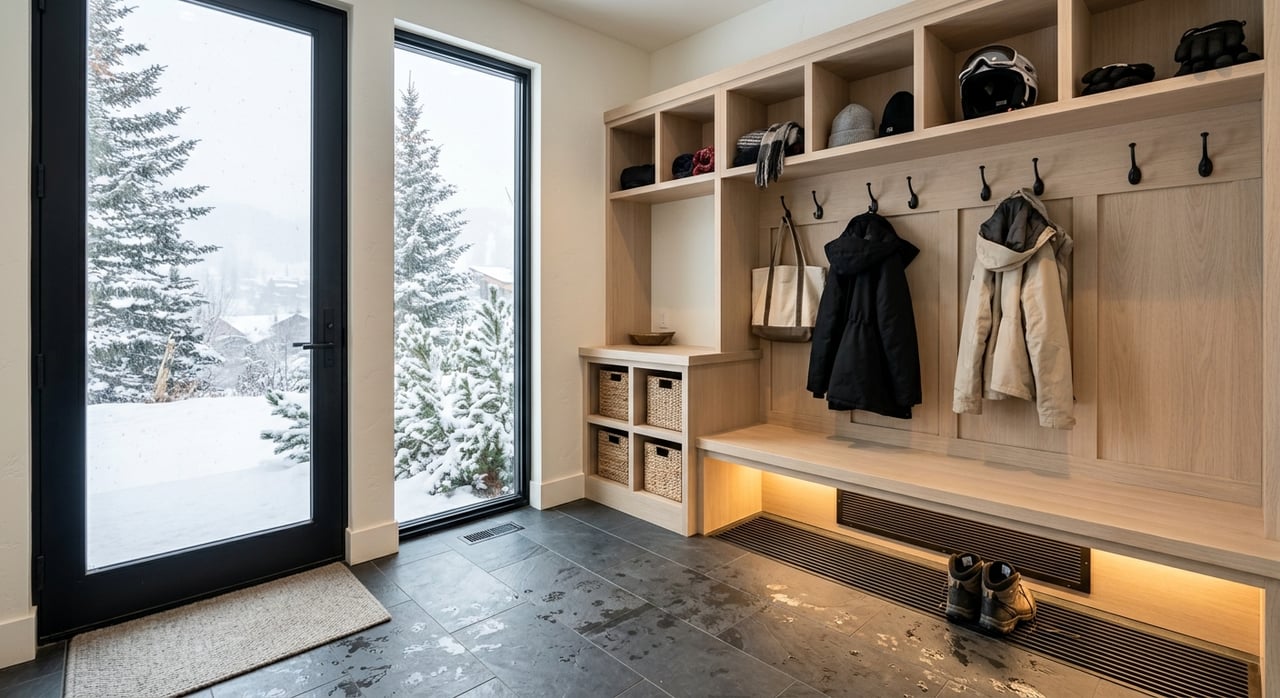
Snowmass condo inventory includes a wide range of amenity packages. Common features shown in official lodging pages include full kitchens, fireplaces, balconies or decks, ski storage lockers, pools, and hot tubs. Some buildings also offer front desks, concierge service, housekeeping, on-site management, ski shops, and boot storage with warmers.
The key is to match the building to how you plan to use the property. If you want a low-fuss second home with frequent guest visits, service-heavy buildings can make ownership easier. If you prefer a simpler setup, a more traditional condominium building may still work well, but you should go in knowing it may be more hands-on.
Amenities Worth Asking About
When touring a Snowmass Village ski condo, it helps to ask specifically about:
- Ski lockers
- Owner closets
- Boot dryers or boot warmers
- Bike storage
- Pool and hot tub access
- Front desk coverage
- Housekeeping availability
- On-site management
- Concierge or transportation services
Specific answers matter more than general marketing language. In Snowmass, many of these features are common, but they are not universal.
Take Parking Seriously
Parking deserves just as much attention as lift access. In a mountain resort setting, parking can affect your experience every time you arrive, leave, unload, or host guests. A beautiful condo is less convenient if the car setup is frustrating in winter.
Some buildings include covered parking or complimentary parking, while others rely on fee-based or off-site arrangements. The town’s winter parking rules also matter. Public lots are permit-only from 7 a.m. to 1 p.m. in winter, and the Base Village parking garage is privately managed, charges for winter parking, and does not allow overnight public parking in winter.
Questions to Ask About Parking
Before you buy, confirm whether parking is:
- Deeded to the unit
- Assigned by the HOA or building
- First-come, first-served
- Covered or uncovered
- Off-site
- Seasonal-permit dependent
- Easy for guests to use
If family or rental guests will drive, parking can become a meaningful part of the condo’s long-term appeal.
Understand the Building’s Service Model
One of the biggest Snowmass condo tradeoffs is the difference between a turnkey resort-style ownership experience and a more independent one. Buildings with front desk coverage, housekeeping, rental management participation, transportation support, or on-site ski services may feel easier for frequent short stays. That can be especially helpful if you live out of market.
A simpler building may offer a different ownership experience with fewer service layers. Neither option is automatically better. What matters is choosing the model that fits how often you visit, how involved you want to be, and whether you expect regular guest turnover.
Review Short-Term Rental Rules Early
If you plan to rent your condo, even part of the year, do not wait until late in the process to review Snowmass Village short-term rental rules. In Snowmass, any rental of fewer than 30 consecutive days is considered a short-term rental. The town requires both a business license and a short-term rental permit.
The town also notes revised short-term rental regulations effective December 30, 2025. Since permits are non-transferable, you should not assume you can simply take over the seller’s existing setup. That is a detail buyers sometimes miss, and it can affect your post-closing plans right away.
Know the Permit Category
Buyers should determine whether the building falls under:
- STR Permit Type 2, Multi-family A
- STR Permit Type 3, Multi-family B
Multi-family A applies to a multi-family development in the same planned unit development with at least 25 dwelling units, centralized check-in, property management, and rental management participation by at least 67% of the units. If those requirements are not met, the building falls into Multi-family B.
Confirm HOA Rules Too
Town rules are only part of the picture. Snowmass regulations say owners must verify that the HOA does not prohibit short-term rentals and must follow the most restrictive rules that apply. In practice, that means a condo’s governing documents can shape your rental options just as much as town regulations.
Be Clear on Operating Requirements
For short-term rentals, town rules also require:
- Insurance for STR use
- A designated local owner representative available 24/7/365
- Response capability within 60 minutes
- Compliance with permit display and listing requirements
The town FAQ also says there are no current town location restrictions on STRs, but occupancy caps, permit rules, and HOA restrictions still apply.
Factor In Rental Economics
If rental income is part of your decision, make sure you understand the operating numbers before you buy. According to the town FAQ, the combined tax burden for short-term rentals is 12.8%, and reporting is monthly. The same FAQ states that Airbnb and VRBO do not remit those taxes on the owner’s behalf.
Occupancy rules also matter because they shape guest capacity. The town says units with four or more bedrooms are capped at two people per legal bedroom plus four, while units with three or fewer bedrooms are capped at two people per legal bedroom plus two. Those rules can affect how you evaluate a unit’s rental fit.
Use a Smart Tour Checklist
A condo tour in Snowmass should go beyond finishes and views. You are not just buying the unit. You are buying the winter routine, the building systems, and the ownership structure that comes with it.
Snowmass Condo Tour Checklist
When you tour, ask to confirm:
- The exact winter path from the unit to the slopes
- The exact winter path from the unit to the shuttle stop
- Walking distance to the village core or mall areas
- Whether ski access is true ski-in/ski-out, ski-out, or walk-to-lift
- Whether parking is deeded, assigned, or permit-based
- Whether the unit has ski storage, owner storage, or boot storage
- Whether the building offers front desk, housekeeping, or concierge services
- Whether HOA documents limit rentals, guest use, or parking
- Whether the building’s STR category is already understood
- Whether the rental setup depends on systems that will not transfer after closing
Think Beyond the Listing Photos
In Snowmass Village, many condos look appealing online. The stronger purchase decision usually comes from understanding how the property performs in real life, especially in winter. Access, shuttle convenience, parking, service level, storage, and local rental rules all shape the ownership experience.
That is where local guidance can make a real difference. When you compare buildings carefully and ask the right questions early, you are more likely to choose a Snowmass ski condo that fits both your lifestyle and your long-term goals.
If you are comparing Snowmass Village condos and want experienced, on-the-ground insight into access, building differences, and local ownership considerations, connect with Monica Viall to schedule a consultation.
FAQs
What should you look for in ski access at a Snowmass Village condo?
- Look beyond the ski-in/ski-out label and ask about the actual winter path from the unit to the snow, lifts, gondola, and shuttle stop.
What parking questions should you ask when buying a Snowmass Village ski condo?
- Ask whether parking is deeded, assigned, covered, off-site, fee-based, or dependent on seasonal permits, especially if you or your guests will bring a car.
What amenities matter most in a Snowmass Village ski condo?
- The most useful amenities often include ski lockers, owner storage, boot warmers, full kitchens, hot tubs, front desk coverage, housekeeping, and on-site management, depending on how you plan to use the condo.
What are the short-term rental rules for Snowmass Village condos?
- Rentals of fewer than 30 consecutive days require a business license and STR permit, and owners must also comply with HOA rules, insurance requirements, local representative rules, and occupancy caps.
What should you review before making an offer on a Snowmass Village condo?
- Review the HOA documents, rental rules, reserve policy, parking setup, service model, and the condo’s real winter access to the slopes, shuttle, and village core.