Buying land in Snowmass can feel exciting right up until the questions start stacking up. Is the parcel in Snowmass Village or Pitkin County? Are utilities nearby? Will snow, slope, wetlands, or road access affect what you can build? If you are thinking about a land purchase in this part of the Roaring Fork Valley, asking the right questions early can save you time, money, and frustration later. Let’s dive in.
Start With Jurisdiction
One of the first things you need to confirm is who governs the parcel. In the Snowmass area, land may fall inside the Town of Snowmass Village or in unincorporated Pitkin County, and that difference matters because each has its own land use rules and review process.
According to the Town of Snowmass Village, buyers should verify zoning directly with Community Development because zoning maps are being updated and the Town land use code applies to village parcels. Pitkin County separately maintains its own zoning district system and land use code for county land. Before you go too far, use the Town’s GIS mapping tools and review the Town’s FAQ guidance on zoning verification.
Questions to Ask About Jurisdiction
- Is the parcel inside Snowmass Village or unincorporated Pitkin County?
- What zoning district applies today?
- Are there overlays or special reviews to consider?
- Is there a variance, special review, or PUD process that could apply?
Confirm Zoning Before You Assume Buildability
Not every parcel that looks residential works like a standard homesite. Pitkin County’s zoning code includes rural districts, urban and suburban residential districts, business districts, ski-recreation districts, village commercial areas, and planned unit development designations.
That means you should not assume a lot has straightforward residential rights just because it is in a developed area. Review the applicable Pitkin County zoning districts early so you understand the basic framework before pricing out a project.
Why Zoning Matters Early
Zoning can affect:
- Whether a home can be built as planned
- The review path and timeline
- Setbacks and site design constraints
- Whether added approvals may be needed
In a market like Snowmass, this early step can help you avoid buying land that does not match your goals.
Look Closely at Access and Road Issues
Access is about more than whether you can physically reach the lot. You also need to know whether the parcel has legal access from a public road and whether improvements to that access will trigger permits.
Pitkin County requires right-of-way permits for several activities, including utility installation in the right-of-way, physical changes to the right-of-way, access tie-ins, and modifications. The County also uses these permits for surveying, potholing, and temporary occupation of the right-of-way. You can review those standards through Pitkin County road and right-of-way permit information.
Questions to Ask About Access
- Does the parcel have legal access from a public road?
- Will a driveway connection or access modification require approval?
- Will utility crossings or work in the right-of-way need permits?
- Are there any frontage conditions that could complicate development?
Factor In Snow and Seasonal Conditions
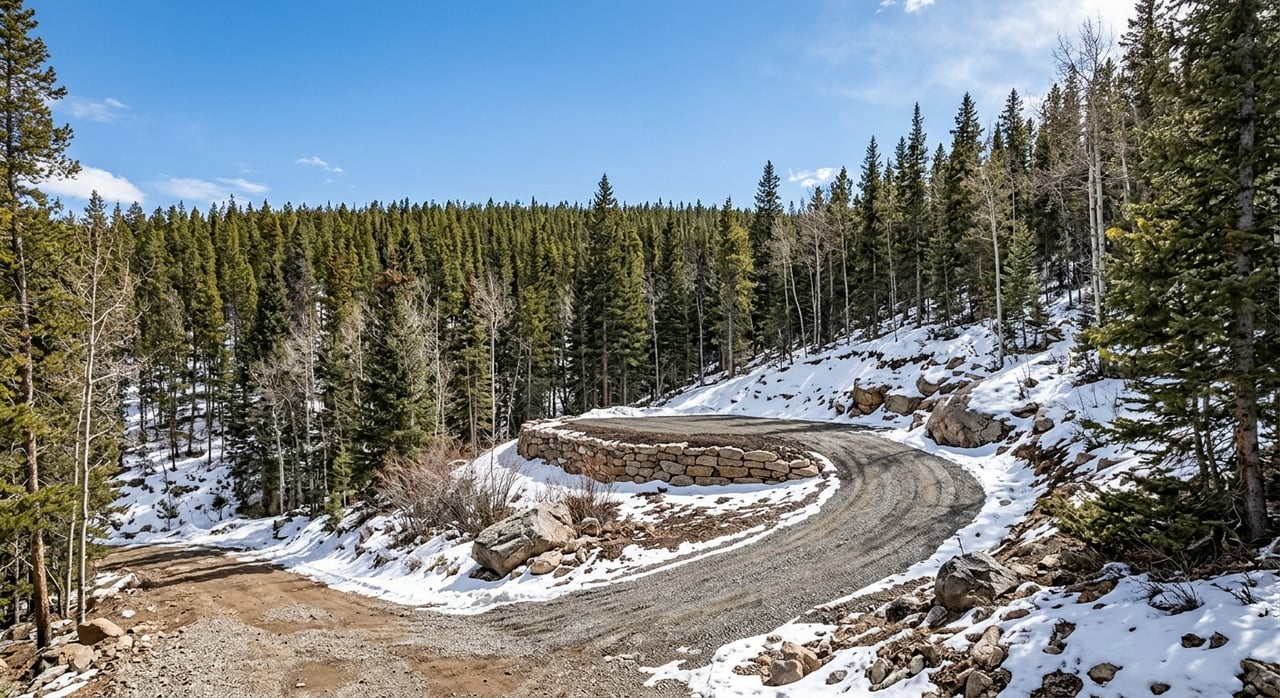
In Snowmass, winter conditions can shape both design and construction logistics. Snowmass Village maintains 39 miles of roadway and prioritizes snow removal based on traffic volume, public safety, bus routes, and emergency access.
The Town also notes that at least 10 unobstructed feet on either side of pavement may be needed for snow storage, that windrows in front of driveways are usually left in the right-of-way, and that snowplows can push snow as far as 30 feet from the pavement edge. North-facing slopes may also see greater snow accumulation, which can affect plowing order. These details are outlined in the Town’s snow removal plan.
Why Snow Conditions Matter
If you are evaluating raw land, ask how winter operations could affect:
- Driveway placement
- Snow storage near the road
- Frontage usability
- Emergency and delivery access
A lot that looks simple in summer may function differently in January.
Ask About Construction Timing Early
Mountain construction has narrower timing windows than many buyers expect. Snowmass Village limits construction activity to Monday through Saturday from 7:00 a.m. to 6:00 p.m., with no work on Sundays or national holidays. The Town also enforces seasonal vehicle weight limits of 40,000 pounds GVW on all town roads from March 15 to June 15, according to its official FAQ.
Pitkin County also notes that road-cut work is weather-dependent and that asphalt plants in the Roaring Fork Valley often stop operating at the end of October. The County identifies May 15 through October 31 as a reasonable planning window for this type of work. That guidance appears on the County’s road standards and permit page.
Questions to Ask About Timing
- What months are realistic for excavation and road work?
- Can utility tie-ins happen during your target construction season?
- Will heavy deliveries be limited by road conditions or weight restrictions?
- Does your budget account for seasonal delays?
Verify Utility Availability, Not Just Nearby Service
Utility access is one of the biggest budget variables when buying land. Snowmass Village identifies the primary providers as Snowmass Water & Sanitation for water, Source Gas for gas, Holy Cross Electric for electricity, and the Town’s Public Works department for solid waste and recycling, as listed in the Town’s utilities FAQ.
Still, you need more than a provider name. You should confirm whether service is already at the lot line, nearby, or farther away than expected. Extension costs can materially affect your total project cost.
Key Utility Questions
- Are water and sewer available to the parcel?
- Is gas service nearby?
- Is electric service at or near the lot line?
- What will it cost if lines need to be extended?
Understand Water, Sewer, and Fee Obligations
If the property is served by Snowmass Water & Sanitation, their rules govern new and continued service. The district places responsibility on the property owner for the sewer service line from the home to the main sewer line and the water line from the home to the curb valve. SWSD also requires metering, pressure testing, and freeze-aware placement for remote readers under its rules and regulations.
SWSD also states that tap fees or system development fees apply to new construction and remodels, and that plans for new construction or remodels must be submitted for approval before the Town releases a building permit. You can review that on the district’s tap fee page.
Budget Items Buyers Often Miss
When you build a budget, ask whether it includes:
- Water tap fees
- Sewer or system development fees
- Utility extension costs
- Metering and testing requirements
These are not small details. They can meaningfully change the economics of a land purchase.
Check Whether Septic Is Required
If a parcel sits outside a sewer district, wastewater service may look very different. Pitkin County states that homes outside sewer district service are typically served by an onsite wastewater treatment system, or septic system, and that OWTS applications must be submitted electronically through the County permit system. See the County’s wastewater and OWTS information.
That means a buyer should ask early whether sewer service is actually available or whether a septic design and approval process will be part of the project.
Build a Smarter Budget From Day One
Land buyers often focus on purchase price first and development cost second. In Snowmass, that order can create problems. Beyond utilities and permit costs, Pitkin County also collects a 0.5% construction use tax on building materials used in the county when county sales tax was not collected, including projects inside municipal jurisdictions. That requirement is outlined on the County’s use tax page.
A realistic land budget should account for more than the lot itself. You want a clear picture of fees, infrastructure, timing, and site work before you commit.
Watch for Site Constraints
Mountain parcels can come with hidden complexity. Wetlands, drainage concerns, unusual topography, and erosion control requirements may all affect what can be built and how the site must be developed.
Pitkin County notes that many local properties contain wetlands, especially near streams, rivers, lakes, and ponds. The County also states that nearly all earthwork within a wetland requires a U.S. Army Corps Section 404 permit. You can learn more from the County’s wetlands and riparian areas guidance.
Site Questions Worth Asking
- Is any portion of the parcel wet, low, or near riparian areas?
- Will drainage planning be needed?
- Does the lot’s shape or slope create design limits?
- Could site conditions trigger added review or permits?
Be Realistic About Slope and Design Challenges
A steep or oddly shaped lot is not always a dealbreaker, but it may require extra planning. Pitkin County’s Board of Adjustment states that variances may be considered when unusual narrowness, shallowness, shape, or topographic conditions create practical difficulties. You can review that process on the County’s Board of Adjustment page.
That is useful context for buyers, but it is not the same as guaranteed approval. If a parcel has unusual physical characteristics, you should treat due diligence as essential, not optional.
Ask About Drainage, Stormwater, and Wildfire Review
Environmental review can influence both timeline and design. Pitkin County requires drainage and erosion control plans with many land use and building permit applications, and construction that disturbs at least 1 acre requires state stormwater permit coverage at least 10 days before work starts. That requirement is explained on the County’s state stormwater management page.
Wildfire planning is also part of the conversation. Pitkin County says its 2026 Wildfire Resiliency Code section 11.35 becomes effective May 2, 2026 for building permit applications submitted on or after that date. Snowmass Village also reports ongoing wildfire mitigation work with Roaring Fork Fire Rescue near buildings and infrastructure, according to the Town’s building department information.
Use Local Experts Early
In a market like Snowmass, early coordination matters. Snowmass Village strongly recommends pre-submittal meetings for major projects so buyers and builders can discuss code questions and identify issues before plans go too far. The Town also says contractors on residential and commercial projects must have a valid contractor’s license and Town business license, as explained on the same building page.
If you are buying land, one of the smartest moves you can make is building your due diligence team early and asking practical questions before you close. A thoughtful local strategy can help you see issues sooner and move forward with more confidence.
Buying land in Snowmass can be a great opportunity, but it rewards buyers who do their homework upfront. If you want guidance on evaluating land, zoning questions, seasonal constraints, or the broader Snowmass and Roaring Fork Valley market, connect with Monica Viall to schedule a consultation.
FAQs
What should you confirm first when buying land in Snowmass?
- You should first confirm whether the parcel is in Snowmass Village or unincorporated Pitkin County, because jurisdiction determines the zoning code, review process, and permitting path.
What zoning questions matter for Snowmass land buyers?
- You should ask what zoning district applies, whether overlays exist, and whether the parcel may require a variance, special review, or planned unit development process.
What access issues should you review for a Snowmass land parcel?
- You should confirm legal access from a public road and ask whether driveway tie-ins, utility crossings, or work in the right-of-way will require permits.
What utility questions should you ask before buying land in Snowmass?
- You should verify whether water, sewer, gas, and electric are already available at or near the lot line and ask what extension costs, tap fees, or system development fees may apply.
When is construction easiest to plan for land in Snowmass?
- Pitkin County identifies May 15 through October 31 as a reasonable planning window for road-cut work, while Snowmass Village also has seasonal road weight limits and construction-hour rules that affect scheduling.
What site constraints can affect building on land in Snowmass?
- Wetlands, riparian areas, steep topography, drainage requirements, erosion control, and wildfire-related standards can all affect design, approvals, and project cost.